The Contagion of Violence
Violence is a contagious disease.
Violence meets the definitions of disease and contagious; meets all criteria including waves, clustering and transmission; and responds to epidemic control methods.
Epidemic are characterized by recognizable waves and clustering patterns.
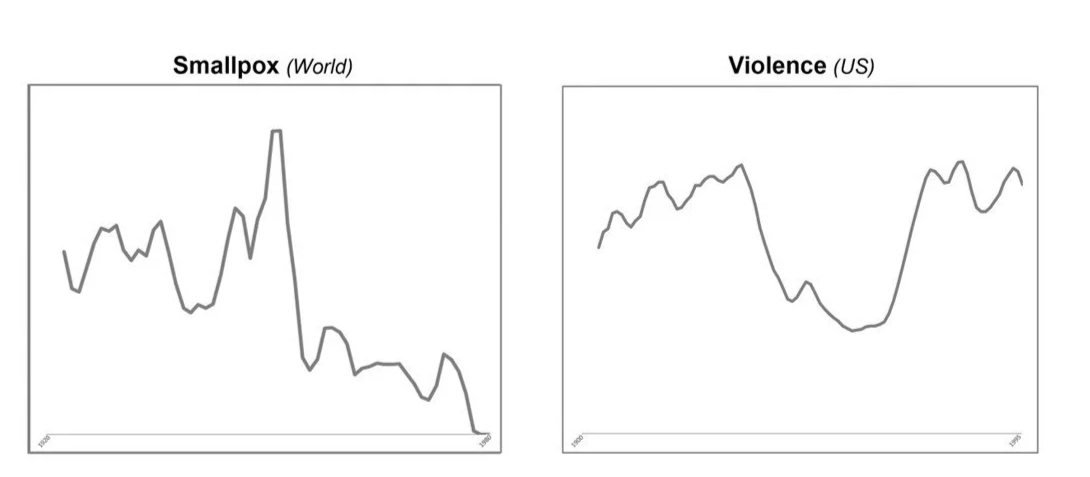
Epidemic Waves

Epidemic Clustering
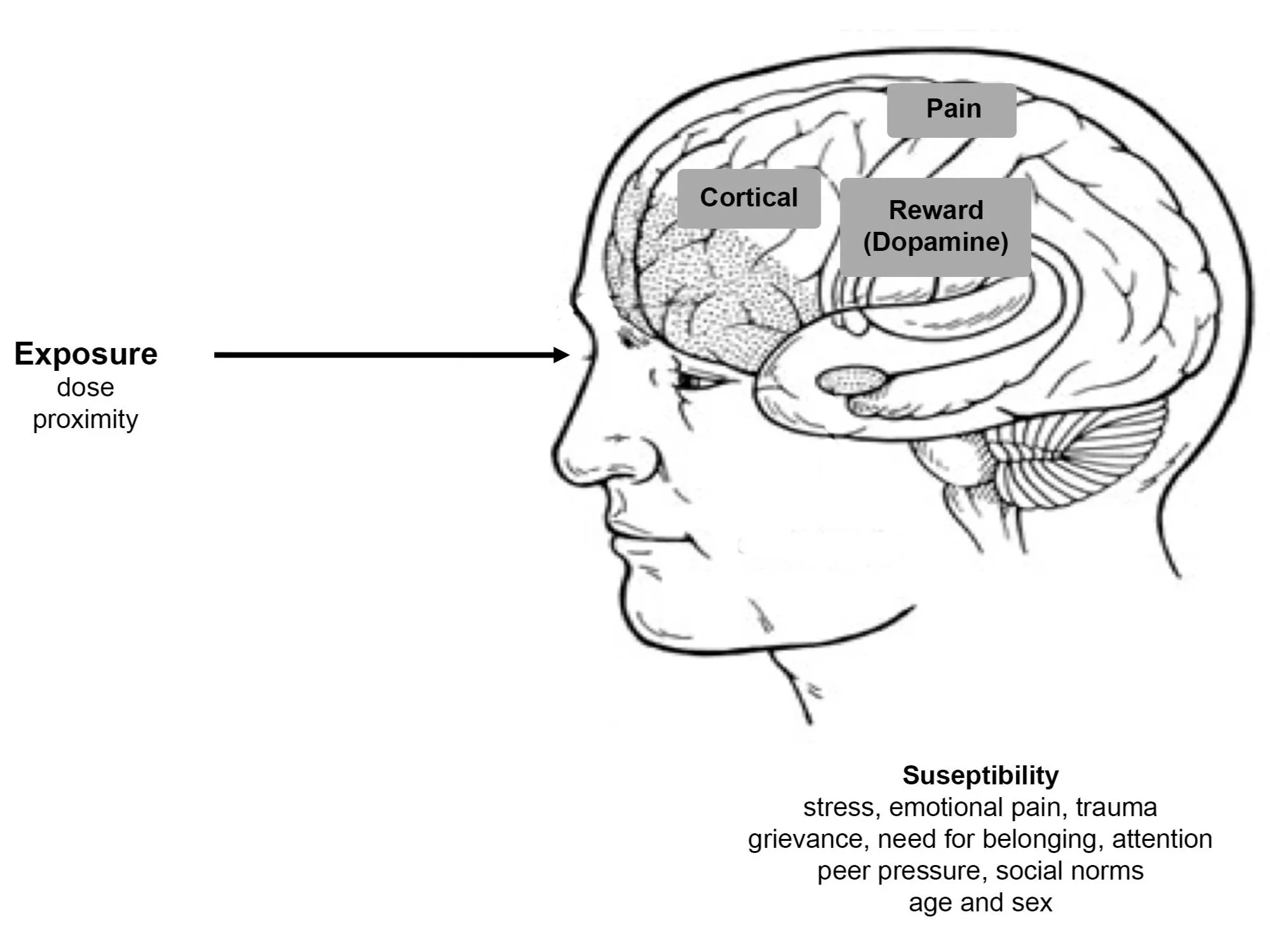
Epidemic Spread
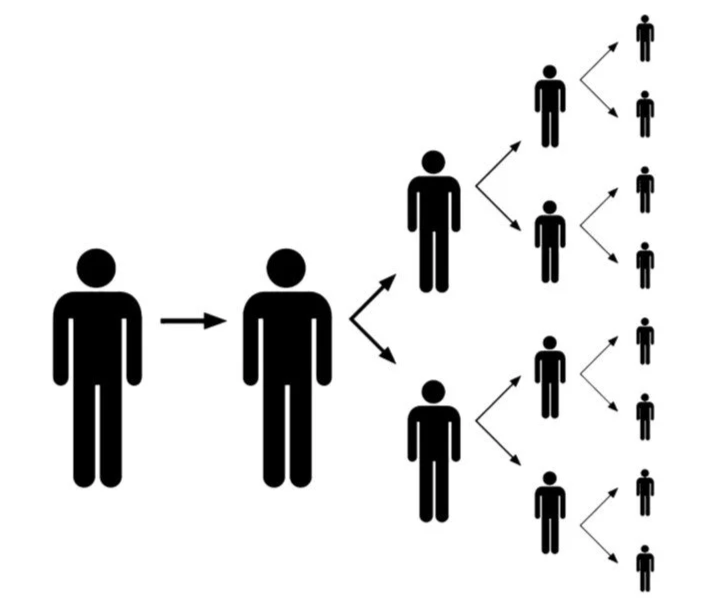
Transmission of Violence
Highlighted Academic Papers from Dr. Gary Slutkin
-
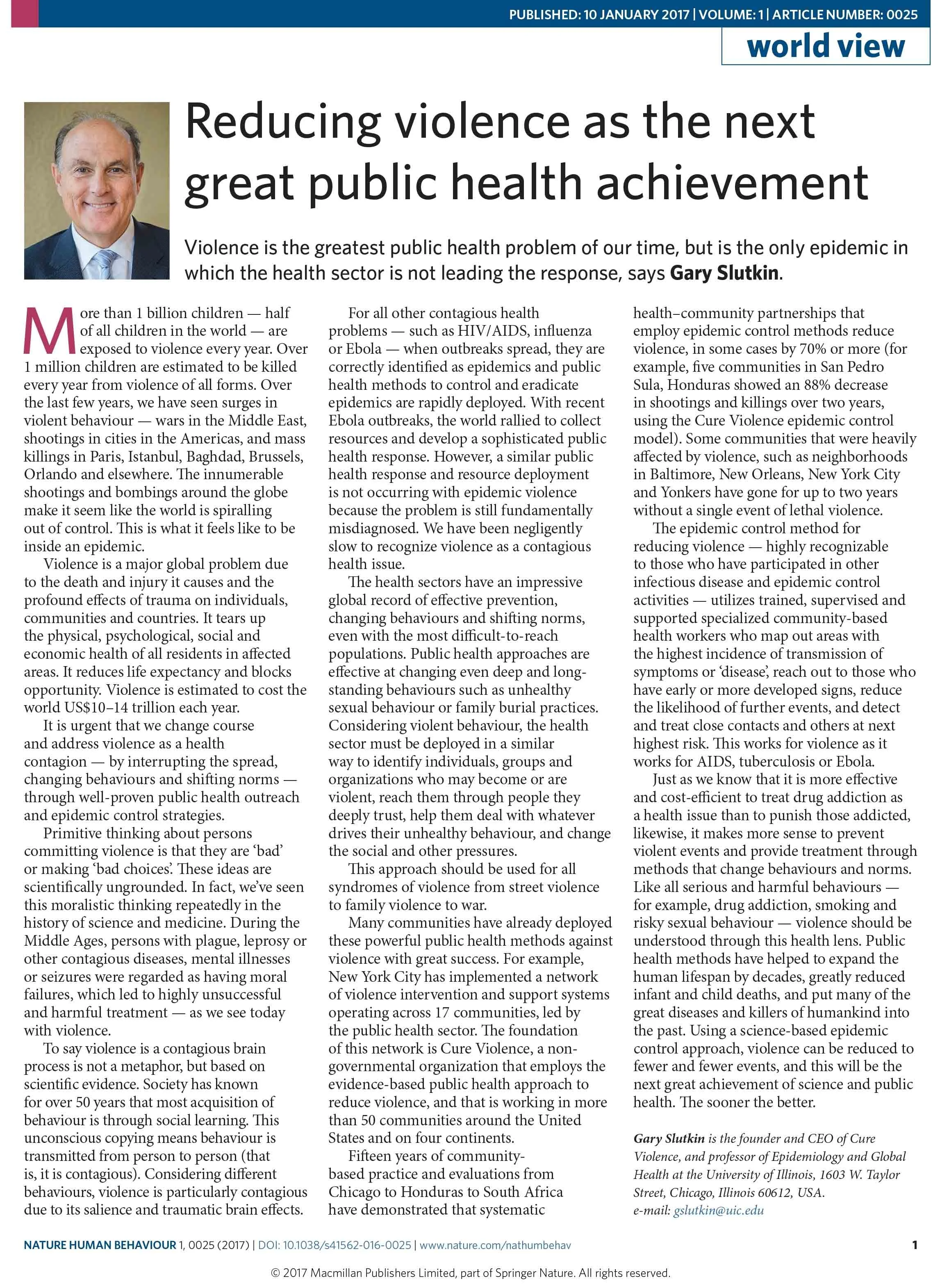
Nature - Human Behavior (2017)
-
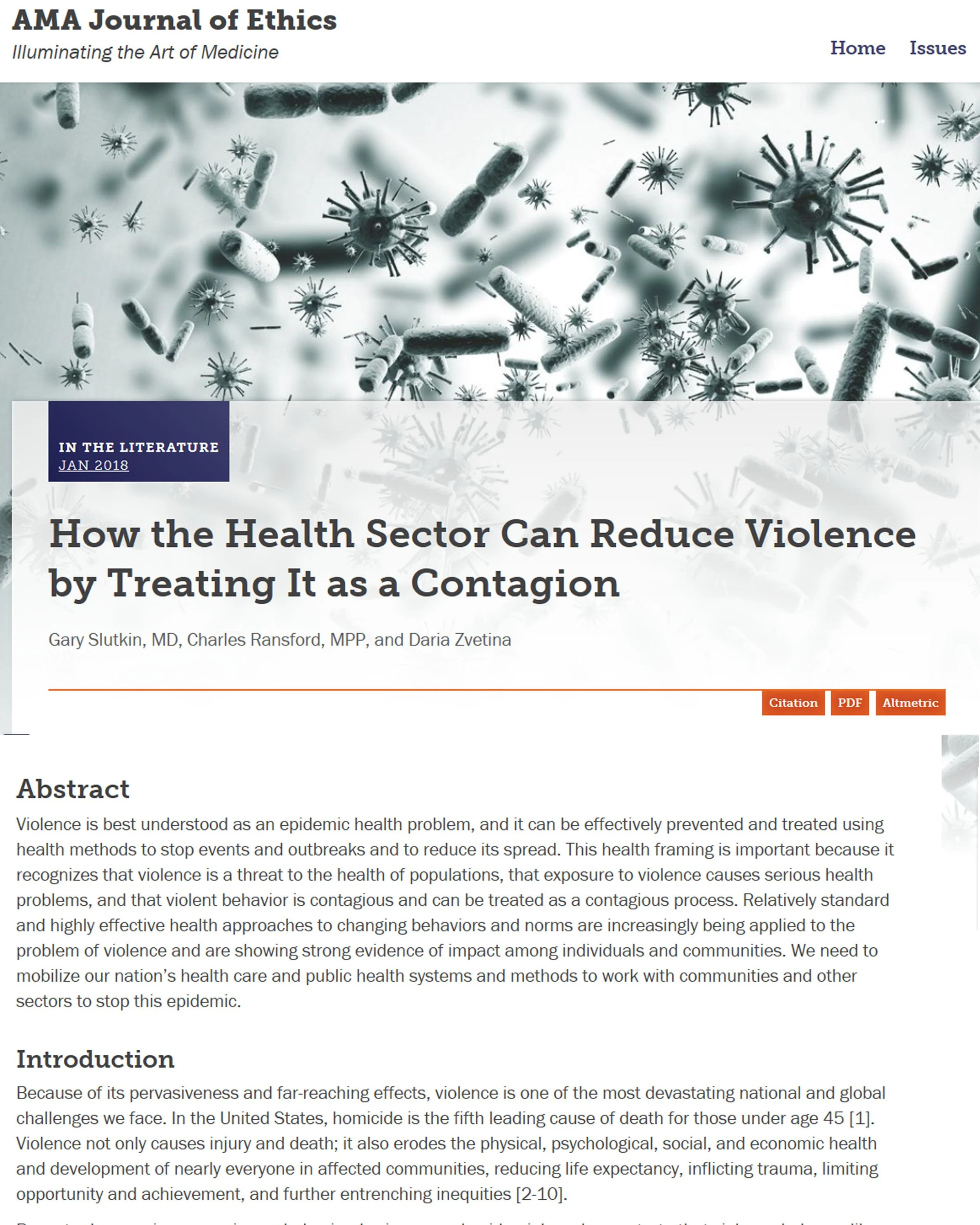
American Medical Association - Journal of Ethics (2017)
-
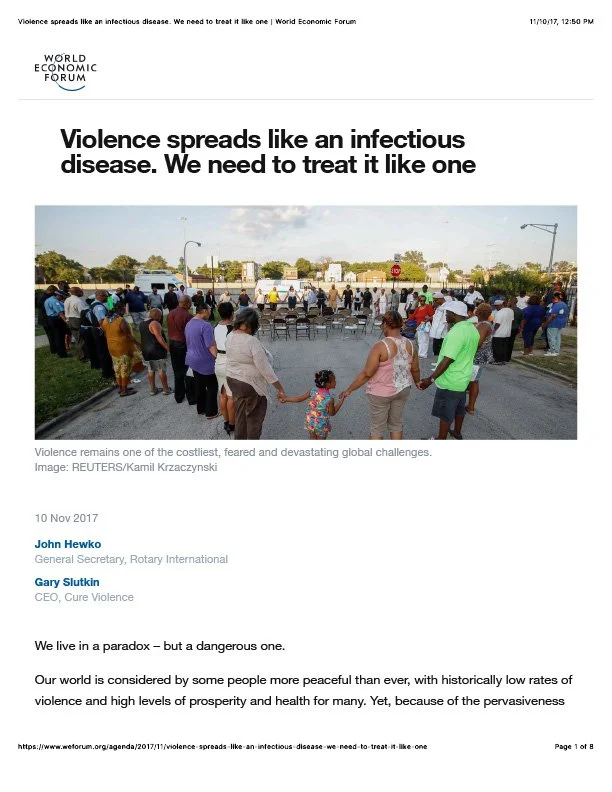
World Economic Forum (2017)
-
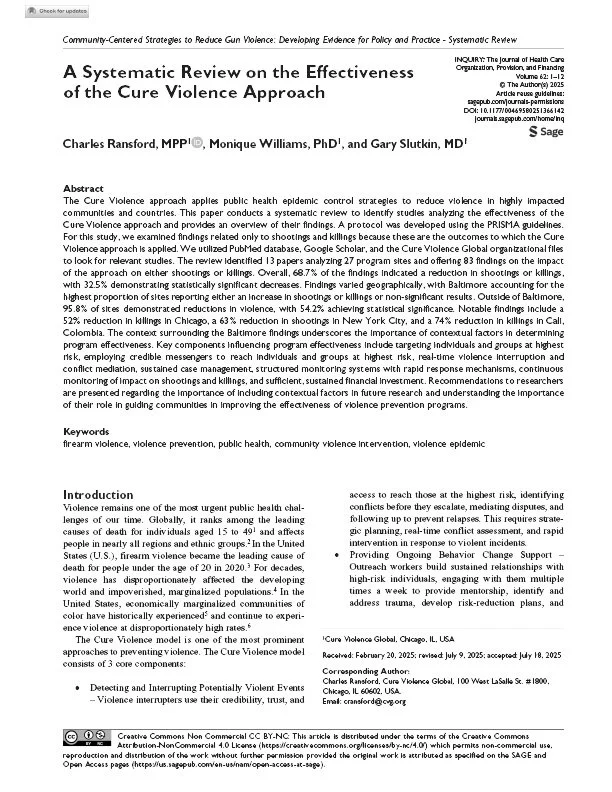
Inquiry (2025)
-
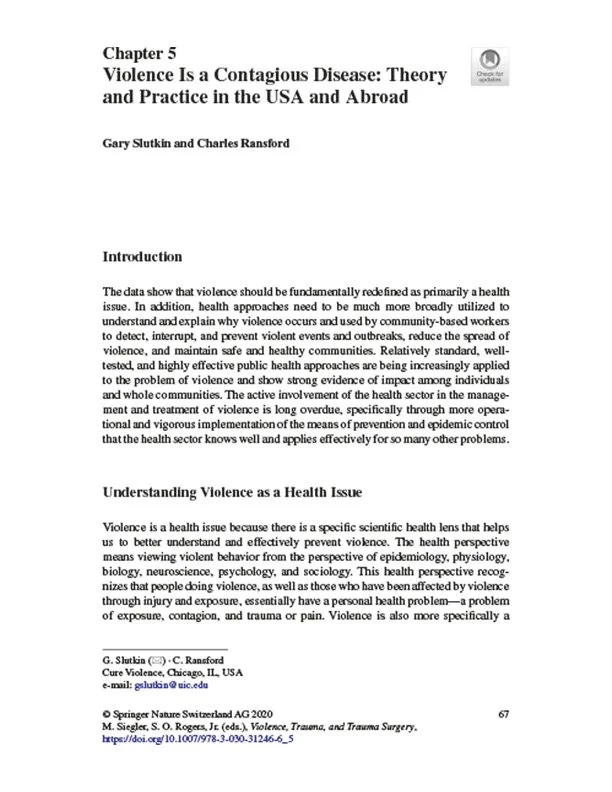
Violence, Trauma, and Trauma Surgery (2020)
Academic Papers from Dr. Gary Slutkin
on Violence and Other Contagious Diseases
-
Slutkin G. The End of Violence; Eliminating the World's Most Dangerous Epidemic Little Brown; 2026 https://www.hachettebookgroup.com/titles/dr-gary-slutkin-md/the-end-of-violence/9780316520119/?lens=little-brown
-
Ransford C. and Slutkin G. (2025) Cure Violence: The Epidemic Control Method for Reducing Violence; Violence: A Public Health Issue and Crisis; Social Injustice and Public Health; Oxford University Press. https://global.oup.com/academic/product/social-injustice-and-public-health-9780197803714?cc=us&lang=en&
-
Ransford C, Williams M, Slutkin G. A Systematic Review on the Effectiveness of the Cure Violence Approach. Inquiry. 2025 Jan-Dec;62:469580251366142. doi: 10.1177/00469580251366142. Epub 2025 Sep 9. PMID: 40922561; PMCID: PMC12420962.
-
Vaillancourt T and Slutkin G (2025) Editorial: Exposure to violence in children and youth during COVID-19 and mental health outcomes. Front. Child Adolesc. Psychiatry 4:1675911. doi: 10.3389/frcha.2025.1675911; https://www.frontiersin.org/journals/child-and-adolescent-psychiatry/articles/10.3389/frcha.2025.1675911/full
-
Slutkin G and Ransford, C Violence Is a Contagious Disease: Theory and Practice in the USA and Abroad in Ethical Issues, Interventions, and Innovations in Violence, Trauma and Trauma Care. Mark Siegler Selwyn O. Rogers Jr. Editors (2022) https://cvg.org/wp-content/uploads/2022/09/Violence-Trauma-and-Trauma-Surgery-Cure-Violence.pdf.
-
Fischer, K.R., Cooper, C., Marks, A., & Slutkin, G. (2020). Prevention Professional for Violence Intervention: A Newly Recognized Health Care Provider for Population Health Programs. Journal of Health Care for the Poor and Underserved Johns Hopkins University Press 31(1), 25-34. https://www.raco.cat/index.php/RevistaCIDOB/article/download/328330/418866.
-
Slutkin G; Reducing violence as the next great public health achievement (2018) Nature; (Human Behavior https://cvg.org/2017-nature-hb/.
-
Slutkin G Ransford, C, Zvetina D; How the Health Sector Can Reduce Violence by Treating It as a Contagion (2018) https://journalofethics.ama-assn.org/article/how-health-sector-can-reduce-violence-treating-it-contagion/2018-01.
-
Patton, D, MacGregor K, and Slutkin G: Youth Gun Violence Prevention in a Digital Age, Pediatric Perspectives, (2018 ) https://cvg.org/patton-slutkin-2017/.
-
Ransford, C., and Slutkin G. "Seeing and Treating Violence as a Health Issue." In The Handbook of Homicide, edited by F. Brookman, E. Maguire, and M. Maguire, 599–625. New York, NY: Wiley, (2017). https://cvg.org/2017-handbook-on-homicide/.
-
Slutkin G. Is violence 'senseless'? Not according to science. Let's make sense of it and treat it like a disease. Health Progress. (2016) ;97(4):5. https://europepmc.org/article/med/28165679.
-
Slutkin, G., Ransford, C. L., Decker, R.B., Volker, K. ”Cure Violence – An Evidence Based Method to Reduce Shootings and Killings.” World Bank. (2015). https://cvg.org/world-bank-paper/.
-
Slutkin, G., Ransford, C. L., Decker, R.B. ”Cure Violence—Treating Violent Behavior as a Contagious Disease,” in Eds. Maltz, M. & Rice, S. Envisioning Criminology: Researchers on Research as a Process of Discovery. Springer (2015). https://cvg.org/2015-envisioning-criminology/.
-
Ransford, C. L., Kane, C., Slutkin, G. ”CeaseFire: A Disease Control Approach to Reduce Violence and Change Behavior.” In Eds. Akers, T. & Waltermauer, E. Epidemiological Criminology. Routledge. (2014): 232-242. https://cvg.org/2015-epi-crim-ch21/.
-
Slutkin, G. “Violence Is a Contagious Disease.” The Contagion of Violence. Institute of Medicine. www.cureviolence.org/wp-content/uploads/2014/01/iom.pdf. (2013): 94-111.
-
Slutkin, G. “Treatment of Violence as an Epidemic Disease." in John Snow's Legacy, Epidemiology Without Borders, (2013) Lancet 381 (9874): 1302 - 11. http://www.thelancet.com/journals/lancet/article/PIIS0140-6736(13)60771-0/fulltext (2013).
-
Slutkin G. in Fine, P., Victora, C.G., Rothman, K.J., Moore, P.S., Chang, Y., Curtis, V., Heymann, D.L., Slutkin, G., May, R.M., Patel, V., Roberts, I., Wortley, R., Torgerson, C., Deaton, A. “John Snow’s Legacy: Epidemiology Without Borders.” (2013)http://www.thelancet.com/journals/lancet/article/PIIS0140-6736(13)60771-0/fulltext (2013).
-
Slutkin, G., al-Suwaji, Z., Volker, K., Decker, R. B., & Gryniewicz, J. “The CeaseFire Method Applied to Iraq: Changing Thinking and Reducing Violence” In Eds. Hoffman, J. S., Knox, L. M., and Cohen, R. Beyond suppression: Global perspectives on youth violence. ABC-CLIO, (2011): 69-80. Available from: https://cvg.org/beyond-suppression-iraq/
-
Slutkin G, Decker B. and Volker K. in Locally Led Peacebuilding; Iraq as Case Study https://rowman.com/ISBN/9781538114117/Locally-Led-Peacebuilding-Global-Case-Studies
-
Ransford, C. L., C. Kane, T. Metzger, E. Quintana, and G. Slutkin. "An Examination of the Role of CeaseFire, the Chicago Police, Project Safe Neighborhoods, and Displacement in the Reduction in Homicide in Chicago in 2004." In Youth Gangs and Community Intervention, edited by R. J. Chaskin, 76–108. New York: Columbia University Press, 2010. https://cvg.org/2010-ransford/.
-
Slutkin, G. et al “How Uganda reversed its HIV epidemic.” AIDS Behavior 10.4 (2006): 351-60. https://cvg.org/slutkin-2006/.
-
Bell, C.C., L. Mock, and G. Slutkin “The prevalence of victimization and perceptions of Neighborhood safety in a social service agency and the need for screening.” Journal of the National Medical Association 94.7 (2002): 602-8. https://cvg.org/jnma00324-0080/.
-
Slutkin, G. “Global AIDS 1981-1999: the response.” The International Journal of Tuberculosis and Lung Disease 4.2 (2000): 24-33.
-
Grunseit, A. et al “Sexuality education and young people’s sexual behavior: a review of Studies.” Journal of Adolescent Research 12.4 (1997): 421-53.
-
Slutkin G., Tarantola D, Chin J, Mann J: Sentinel Surveillance for HIV Infection: A Method to Monitor Trends on Population Groups (1988); World Health Organization Global Programme on AIDS https://apps.who.int/iris/bitstream/handle/10665/61728/WHO_GPA_DIR_88.8.pdf?sequence=1
-
Aggleton, P. et al “Risking everything? Risk behavior, behavior change, and AIDS.” Science 265.5170 (1994): 341-5.
-
Slutkin, G. “Can AIDS prevention move to sufficient scale?” Network 13.4 (1993): 16-17 . https://pubmed.ncbi.nlm.nih.gov/12344870/
-
Gordin, F. and G. Slutkin “The validity of acid-fast smears in the diagnosis of pulmonary tuberculosis.” Archives of Pathology and Laboratory Medicine 114.10 (1990):1025-7.
-
Slutkin G., Tarantola D, Chin J, Mann J Use of HIV Surveillance Data in National AIDS Control Programme (1990) https://apps.who.int/iris/bitstream/handle/10665/59785/WHO_GPA_SFI_90.1.pdf?sequence=1
-
Slutkin, G. et al “The Evaluation of Prevention Efforts in National AIDS Programmes.” In Assessing AIDS Prevention (1990): 3-14 https://link.springer.com/book/10.1007/978-3-0348-7211-9
-
Gordin, F.M. et al “Presumptive diagnosis and treatment of pulmonary tuberculosis based on radiographic findings.” American Review of Respiratory Disease 139.5 (1989): 1090-3.
-
Chaisson, R.E. and G. Slutkin “Tuberculosis and human immunodeficiency virus infection.” Journal of Infectious Diseases 159.1 (1989): 96-100.https://academic.oup.com/jid/article-abstract/159/1/96/897158?redirectedFrom=fulltext
-
Slutkin, G., G.F. Schecter and P.C. Hopewell “The results of 9-month isoniazid-rifampin therapy for pulmonary tuberculosis under program conditions in San Francisco. American Review of Respiratory Disease 138.6 (1988): 1622-4.
-
Slutkin, G., J. Leowski, and J. Mann “The effects of the AIDS Epidemic on the Tuberculosis Problem and Tuberculosis programmes. In The Global Impact of AIDS; Proceedings of the International Conference; March 8-10, 1988; Fleming AF, Fitzsimmons DW, Carballo M, Bailey MR, Mann J; Alan R. Liss, Inc, New York
-
Slutkin, G., J. Leowski, and J. Mann “The effects of the AIDS epidemic on the tuberculosis problem and tuberculosis programmes. Bulletin of the International Union against Tuberculosis and Lung Disease 63.2 (1988): 21-4. https://pubmed.ncbi.nlm.nih.gov/3224201/
-
Perez-Stable, E.J. et al “Conversion and reversion of tuberculin reactions in nursing home residents.” American Review of Respiratory Disease 137.4 (1988): 801-4.
-
Gordin, F.M. et al “Evaluation of a third sequential tuberculin skin test in a chronic care Population.” American Review of Respiratory Disease 137.1 (1988): 153-7.
-
Gordin, F.M. et al “Antituberculous drug resistance in a predominantly black veteran population.” Military Medicine 152.11 (1987): 560-2.
-
Slutkin, G., E.J. Perez-Stable, and P.C. Hopewell “Time course and boosting of tuberculin reactions in nursing home residents.” American Review of Respiratory Disease 134.5 (1986): 1048-51.
-
Sullam, P.M., G. Slutkin and P.C. Hopewell “The benefits of evaluating close associates of child tuberculin reactors from a high prevalence group.” American Journal of Public Health 76.9 (1986): 1109-11.
-
Slutkin, G. “Management of tuberculosis in urban homeless indigents.” Public Health Reports 101.5 (1986): 481-5.
-
Sullam, P.M. et al “Paromomycin therapy of endemic amebiasis in homosexual men.” Sexually Transmitted Diseases 13.3 (1986): 126-30.
-
Coates, S.R. et al “Identification of Mycobacterium tuberculosis antigens in Seibert Fractions by immunoblotting.” Journal of Clinical Microbiology 24.1 (1986): 126-30.
-
Perez-Stable, E.J. et al “Tuberculin reactivity in United States and foreign-born Latinos: Results of a community-based screening program.” American Journal of Public Health 6.6 (1986): 643-6.
-
Perez-Stable, E.J. and G. Slutkin “A Demonstration of lack of variability among six tuberculin skin test readers.” American Journal of Public Health 75.11 (1985):1341-3.
-
Perez-Stable, E.J. et al “Tuberculin skin test reactivity and conversions in United States And foreign-born Latino children.” Pediatric Infectious Disease 4.5 (1985): 476-9.
-
Addington, W.W. et al “Non-drug issues related to the treatment of tuberculosis.” Chest 87.2S (1985): 125S-127S.
-
Slutkin, G. et al “Comparison of cefonicid and cefazolin for treatment of soft-tissue infections.” Review of Infectious Diseases 6.4S (1984): S853-6.
-
Gove, S. and G. Slutkin “Infections acquired in the fields and forests of the United States.” Emergency Medicine Clinics of North America 2.3 (1984): 623-33.
-
Gove, S. and G. Slutkin “Infectious diseases of travelers and immigrants.” Emergency Medicine Clinics of North America 2.3 (1984): 623-33.
-
Slutkin, G. “Chest Diseases—Important Advances in Clinical Medicine: Current Treatment of Pulmonary Tuberculosis.” Western Journal of Medicine 140.1 (1984): 85-86.
-
Coleman, D. L. and G. Slutkin “Chemoprophylaxis against tuberculosis.” Western Journal of Medicine 140.1 (1984): 106-10.
-
Schecter, W. et al “Tropical pyomyositis of the iliacus muscle in American Samoa.” American Journal of Tropical Medicine and Hygiene 32.4 (1983): 809-11.
-
Mills, J. et al “Ceftizoxime compared with cefamandole for treatment of soft tissue infections.” Journal of Antimicrobial Chemotherapy 10. Supplement C (1982): 273-9.
-
Slutkin, G., A. Gottlieb and J. Mills “Ceftizoxime for treatment of gonorrhea.” Journal of Antimicrobial Chemotherapy 10. Supplement C (1982): 237-9.
Violence is a disease.

“It is now scientifically clear that violence behaves like a contagious and epidemic disease.”
Contagion of Violence
In a groundbreaking meeting in 2013, the Institute of Medicine brought together experts from around the world to talk about violence as a contagious disease.